


Note: Although the examples below are shown in Canadian Dollars (CAD), our products are available around the world. You can view them in your local currency by clicking on the product links to our online store at Shray Apparel. We also offer free international shipping and 40% off all products for a limited time.
Table of Contents
- Why Selling Shray Apparel Works in 2026
- Live Selling Tips That Actually Move Inventory
- A Live Selling Script for Clothing That Keeps Viewers Watching
- How to Price Clothing for Resale Without Guessing
- How to Photograph Clothes for an Online Store
- Live Selling vs Your Own Online Store: Which Should You Run First?
- Promoting Your Shray Apparel Sales and Tracking What Earns
- Frequently Asked Questions
Last Updated: October 21, 2026
Why Selling Shray Apparel Works in 2026
When you sell Shray Apparel products, you have a real path to income: wearable, everyday designs that shoppers love, and you can sell through Live Selling or your own Online Store.

Shray Apparel Unisex Sweatshirt
Most clothing side hustles fail at sourcing and fit. Shray Apparel fixes sourcing with a curated catalog—and live selling makes fit easy with real-time sizing and styling help.
Below: how to sell Shray Apparel through a livestream and a store, with a script, a pricing method, and which channel to start with. The 2026 playbook: go live to build demand, run a store to capture it.
Live Selling Tips That Actually Move Inventory
Live selling tips start with one rule: treat the stream like a store floor, not a webcam. Viewers buy when they see the garment move, hear the fabric, and get a size answer in seconds.

A woman in her late twenties hosting a livestream clothing sale from a bright home studio, holding a pink hoodie up to the camera while a phone on a tripod films her and a clothing rail sits behind her
Set up for success before you press record:
- Light the rail, not your face. A ring light on the clothes shows true color.
- Use a tripod and a second phone. One films, one reads comments.
- Prep 10 to 15 pieces max. Too many options slow the show.
Set Up Your Show Before You Go Live
A live selling show needs three zones: the rail, the fitting spot, and the comment screen. Keep the fitting spot close to camera so you can stretch a piece without walking away.
Do these checks 15 minutes before you start:
- Charge your phone and clear notifications.
- Pin a comment with your store link and shipping details.
- Set your shipping and returns policy in writing before the first sale.
Merchandise the Rail Like a Store
Merchandising is the part most sellers skip, and it costs them sales. Group pieces by outfit, not category: build a look, then sell it piece by piece. Shoppers buy the whole outfit more often than a single item.
Try this rail order:
- Hero piece first, like the Viral Pink Bow Hoodie, because it stops the scroll.
- A layering piece next, like the Shray Apparel Unisex Sweatshirt.
- A basic to close the outfit, like the Light Blue Unisex Hoodie.
A Live Selling Script for Clothing That Keeps Viewers Watching
A live selling script for clothing works best as a loop, not a monologue. Repeat it every 8 to 10 minutes so new viewers catch the pitch. The loop has five beats: hook, piece, fit, price, and call to action.


The Run-of-Show
Plan a 60-minute show in four blocks, written on a sticky note beside the camera.
- 0 to 5 minutes: welcome and set the rules. Greet viewers by name, state today's theme, the shipping window, and how to buy, and pin a comment with your store link and returns policy.
- 5 to 40 minutes: the loop, piece by piece. Run the five-beat loop for each garment. Move from hero piece to layering piece to basic so viewers see complete outfits.
- 40 to 55 minutes: bundles and last call. Offer outfit bundles, announce which sizes are nearly gone, and answer earlier sizing questions.
The Five-Beat Loop
Here is a script you can adapt:
"Welcome in, we're live for the next hour with new pieces. First up, this oversized hoodie with the bow detail, and I'm holding it up so you can see the fabric. It's soft, it's breathable, and it drapes like this. I'm five-six and wearing a medium, and it fits relaxed. This one is $68.54 and I have limited sizes. Comment 'bow' and I'll reserve yours."
Then repeat with the next piece. Answer size questions by name: "Sarah, for your height I'd take the large."
Demonstrate the Garment, Don't Just Hold It
Apparel buyers cannot touch the fabric, so your demo has to replace their hands. For each piece:
- Stretch the fabric across the chest and let it snap back. Say whether it recovers its shape.
- Show the drape by holding the hem and letting the garment hang. Drape tells buyers how it will fall on the body.
- Flip the inside out to show the fleece or lining. Fabric weight sells warmth.
- Show the details up close: stitching, print, drawcords, and the bow or graphic that makes the piece distinctive.
- State the fit in numbers. Name your height and the size you are wearing, then say whether it runs true, small, or large. Give the size-up recommendation out loud.

100% Pure Wool Knitted Cashmere Sweater for Women
Engagement Prompts That Keep Comments Moving
Silence kills a live show. Drop a prompt whenever comments slow down:
- "Type your usual size and I'll tell you what to take."
- "Comment 'fit' and I'll show this one on body."
- "Vote: this color or the light blue?"
Read names out loud when you answer. A viewer who hears their name is far more likely to stay and buy.
Rehearse the First Five Minutes
The opening is where viewers decide whether to stay. Rehearse the welcome, theme, and shipping reminder before you go live. A tight opening turns a first-time viewer into a repeat buyer.
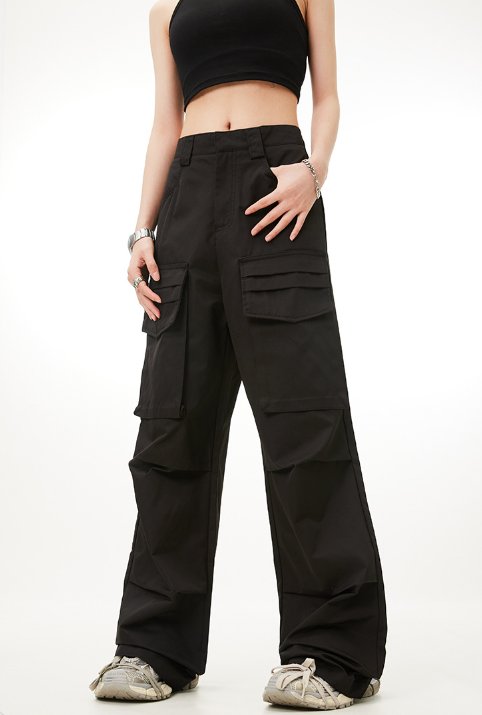
Y2K Kpop Women's Denim Jeans with Grey Flap Pockets
How to Price Clothing for Resale Without Guessing
How to price clothing for resale comes down to one number: your landed cost, what you paid for the item plus shipping to you.
Start with the formula, then stress-test it against real costs.
Selling price = landed cost ÷ (1 - your target margin)
If you want a 40% margin and your landed cost is $40, your price is $40 ÷ 0.60, which is about $67.
Shray Apparel Unisex Sweatshirt →
Target Margin |
Landed Cost $40 |
Landed Cost $60 |
Landed Cost $80 |
|---|---|---|---|
30% |
$57 |
$86 |
$114 |
40% |
$67 |
$100 |
$133 |
50% |
$80 |
$120 |
$160 |
Calculate Net Earnings, Not Just Markup
A price is only useful if you know what you keep. Build a net-earnings sheet for every SKU, using a $68 hoodie with a $40 landed cost as the example:
- Start with the sale price. $68.
- Subtract the payment processor fee. Most processors charge a percentage plus a fixed per-transaction amount. Check your provider's current rate and apply it to the sale price.
- Subtract the platform or marketplace fee. If you sell through a marketplace or store platform that takes a cut, apply that percentage. Live-selling platforms and social commerce tools often charge a commission; confirm the current rate in your seller agreement before you price.
- Subtract outbound shipping. Weigh the packed garment and price the label. A hoodie in a poly mailer is usually a parcel rate, not a letter rate.
- Subtract packaging. Mailer, tissue, and a thank-you card add up per order.
- Subtract the expected return cost. If one in ten orders comes back, spread that cost across every sale. A returned hoodie often means a second shipping label and a garment that may not be resellable at full price.
- Subtract any discount you plan to run. If you routinely offer 15% off, price as if the discount is already applied.
The result is your net per unit. If the net is too thin, you have three levers: raise the price, lower the landed cost by buying better, or bundle to raise average order value.
Price to the Catalog, Not a Flat Markup
Build your price from the catalog, not a guess. The Men's Autumn Hoodie sits at a lower entry point, while the all-over print sweatshirt is a premium piece. A statement piece like the Viral Pink Bow Hoodie can carry a higher margin because the design does the selling; a basic layering piece competes on price and volume.
A common pattern is to set three price tiers: an entry basic, a core hoodie, and a statement piece. Each tier has its own target margin, and each tier anchors the one above it.
Protect the Margin With Discount Discipline
Discounts are the fastest way to erase a margin you worked to calculate. Before you run a promotion, check the net-earnings sheet at the discounted price. If a 20% code drops the net below your floor, cap the code to bundles or raise the bundle price so the discount still clears your minimum.
How to Photograph Clothes for an Online Store
How to photograph clothes for an online store is about consistency, not expensive gear. Phone photos in daylight beat studio shots with bad color.
Follow this shot list for every product:
- Flat lay on a clean, neutral background.
- On-body front to show real fit.
- On-body back for length and drape.
Shoot near a window, turn off the flash, and keep the same background across the catalog. Buyers trust a store that looks organized.
Write product descriptions that answer the size question before it is asked: note the fit, fabric feel, and whether to size up.
Live Selling vs Your Own Online Store: Which Should You Run First?
Start with live selling if you are new, then add your online store once you have repeat buyers. Live selling builds trust fast because buyers see the garment in motion; your store captures people who want to shop quietly at midnight.
Here is how the two channels compare:
Factor |
Live Selling |
Online Store |
|---|---|---|
Startup cost |
Low, phone and light |
Higher, platform and photos |
Trust building |
Fast, face to face |
Slower, relies on reviews |
Best for |
New arrivals, fit questions |
Steady sales, browsing |
Time per sale |
High, live hours |
Low, runs on its own |
Returns risk |
Lower, fit shown live |
Higher, no live demo |
Run live shows to launch a drop, then point viewers to the store for sizes you sold out of.
Promoting Your Shray Apparel Sales and Tracking What Earns
Promotion is where most sellers leave money on the table.
Build a simple promotion loop:
- Before the show: post a teaser with the date and time.
- During the show: pin your store link and remind viewers to follow.
- After the show: share clips and tag buyers who agreed to be featured.
Track three numbers weekly: sales per show, average order value, and return rate. If returns climb, your size notes are unclear. If order value is low, bundle pieces.
Clear shipping and tracking details reduce delivery complaints, so set expectations at checkout.
Selling Shray Apparel works when you sell the fit live and let the store do the quiet work. Shray Apparel gives you a catalog built for everyday wear, from the statement Viral Pink Bow Hoodie to the all-over print Shray Apparel Unisex Sweatshirt with its brushed fleece inside and unisex fit.
Frequently Asked Questions
How does live selling work for clothing?
You broadcast on a platform like Instagram, TikTok or Facebook and show pieces one at a time, quoting the price and size range as you go. Viewers claim items in the comments, then pay through a link or invoice after the show. The format suits apparel because shoppers can see fabric movement, fit on a real body and color under normal light. Keep shows to 45-60 minutes, cap them at 12-15 items, and pin a comment with the buying instructions so newcomers can join mid-stream.
What should you say during a live clothing sale?
Open by naming the show theme and the first item, then move through a repeatable loop: describe the fabric and fit, give the price in CAD, show the size chart, and call out how many are left. Mention the Shray Apparel Unisex Sweatshirt at $49.99 as a higher-ticket anchor and the Light Blue Unisex Hoodie at $36.29 as an easy entry buy. Close each item with a clear next step, such as commenting the size to claim it, and repeat key details every few minutes for new viewers.
How do you price clothing to make a profit?
Start with your total landed cost per piece, including the wholesale price, shipping and any platform fees, then set a retail price that leaves a workable margin after those costs. Shray Apparel pieces range from $36.29 for the Light Blue Unisex Hoodie to $49.99 for the Unisex Sweatshirt, so you can build tiers around entry, mid and statement pricing. Test a bundle discount rather than a blanket markdown, and track average order value so promotions lift revenue instead of just volume.
Is live selling better than selling through an online store?
They solve different problems. Live selling builds urgency and lets you answer sizing questions in real time, which suits one-off drops and limited stock. An online store works around the clock and carries your full catalog, product photos and return policy. Most sellers run both: the store handles steady orders and search traffic, while live shows clear slow-moving stock and launch new arrivals. Start with whichever channel matches your audience, then add the second once your first 20 orders are fulfilled smoothly.